Basic Info.
Pharmacodynamic Factors
Animal Species
Storage Method
Light Proof
Specification
100ml or Customized
Production Capacity
50000bottle/Week
Product Description
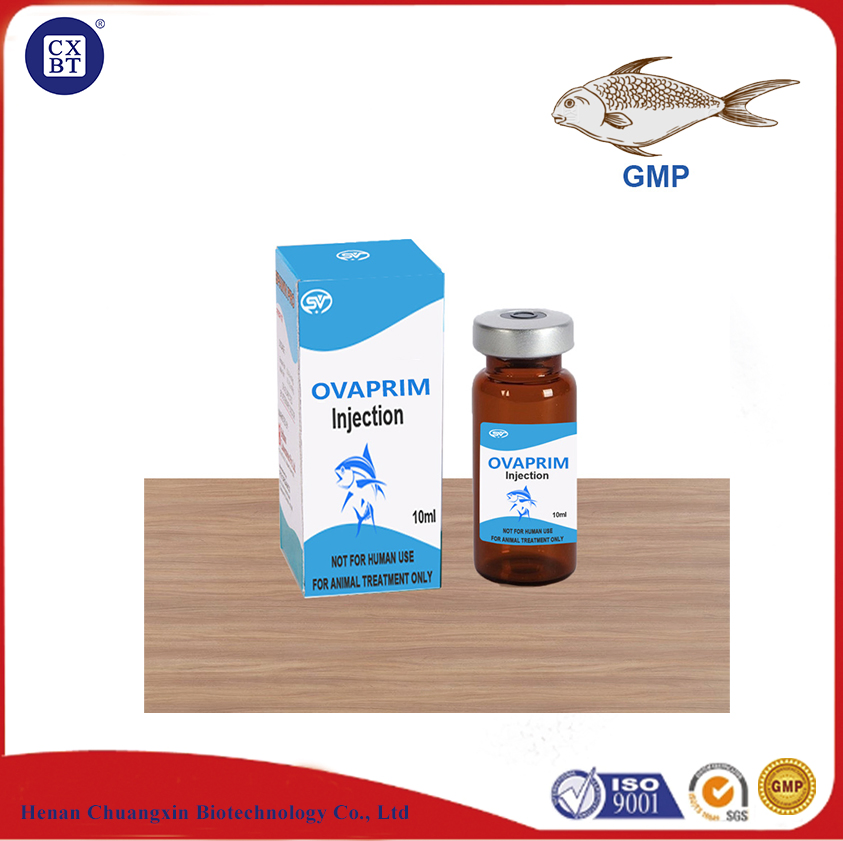
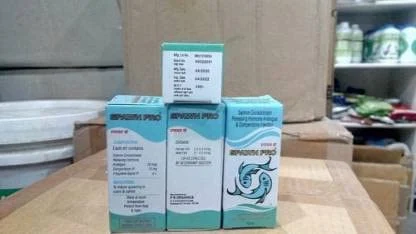
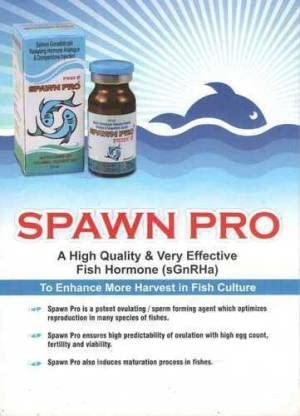
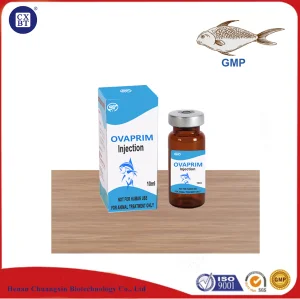
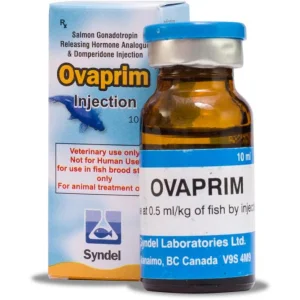
High Quality Fish Hormone Injection
COMPOSITION:
Each ml. contains:
| Salmon Gonadotropin Releasing Hormone Analogue |
20 mcg |
| Domperidone BP |
10 mg |
| Propylene Glycol IPQ.S. |
- |
📍 INDICATIONS:
To induce spawning in Carps, Catfish and many other species of fishes.
Benefits
- Stimulates milt production for a longer period and for greater volume.
- Moves fish forward in the spawning season.
- Maximizes reproductive potential in all spawners within a population.
- Conserves genetic material in a population or in endangered stocks.
- Coordinates maturation during the normal spawning season.
- Spawns a population in a shorter period of time.
- Moves offspring through life stages as a tightly-packed group.
- Alternative to Ovatide, Ovaprim and other synthetic hormones.
- No need to store in refrigerator; Can be stored at Room temperature.
Dosage & Presentation
DOSAGE: The general dose is 0.5 ml per kg body weight of fish. (Varies by species and location)
- Female Fish: 0.3-0.5 ml/kg
- Male Fish: 0.1-0.2 ml/kg
📦 PRESENTATION: 10 ml. Vial
Frequently Asked Questions (FAQ)
What is the primary use of this fish hormone injection?
It is primarily used to induce spawning in various fish species, including Carps and Catfish, by stimulating the reproductive hormones.
Does this product require refrigeration?
No, this specific formulation is stable at room temperature and does not need to be stored in a refrigerator or fridge.
How is the dosage determined for male and female fish?
The general dose is 0.5 ml per kg. Typically, female fish require 0.3-0.5 ml/kg, while male fish require a lower dose of 0.1-0.2 ml/kg.
Can this hormone be used for different fish species?
Yes, it is designed for a wide range of species, though specific dosage may vary based on the species and geographical location.
What are the main benefits for aquaculture farmers?
It helps in maximizing reproductive potential, shortening the spawning period of a population, and stimulating higher volumes of milt production.
 SJ medical