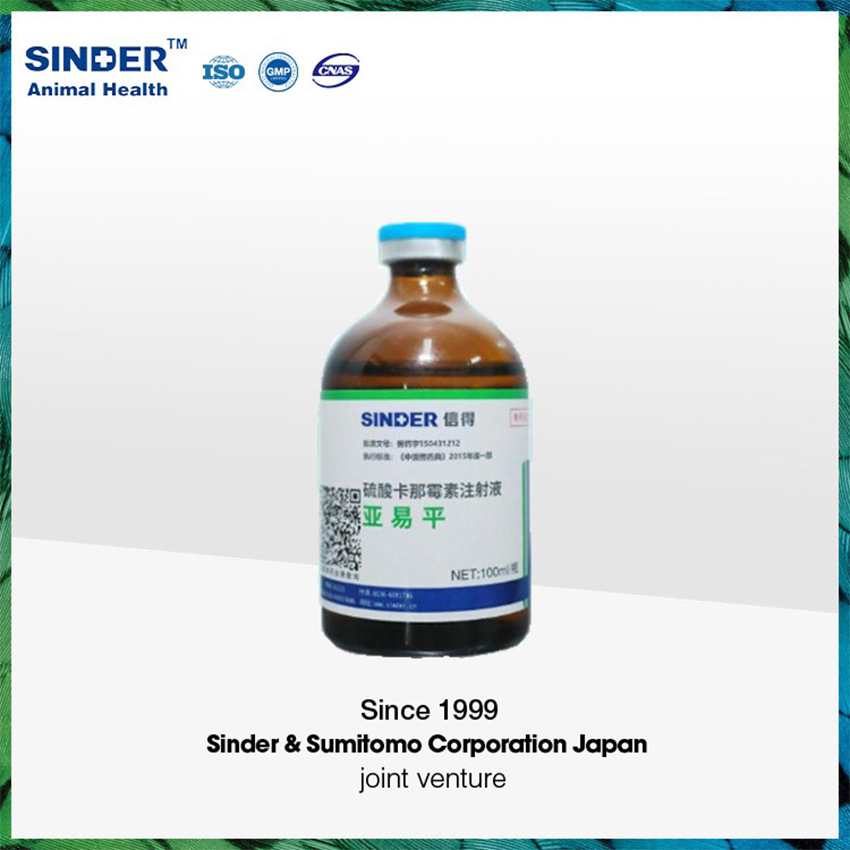
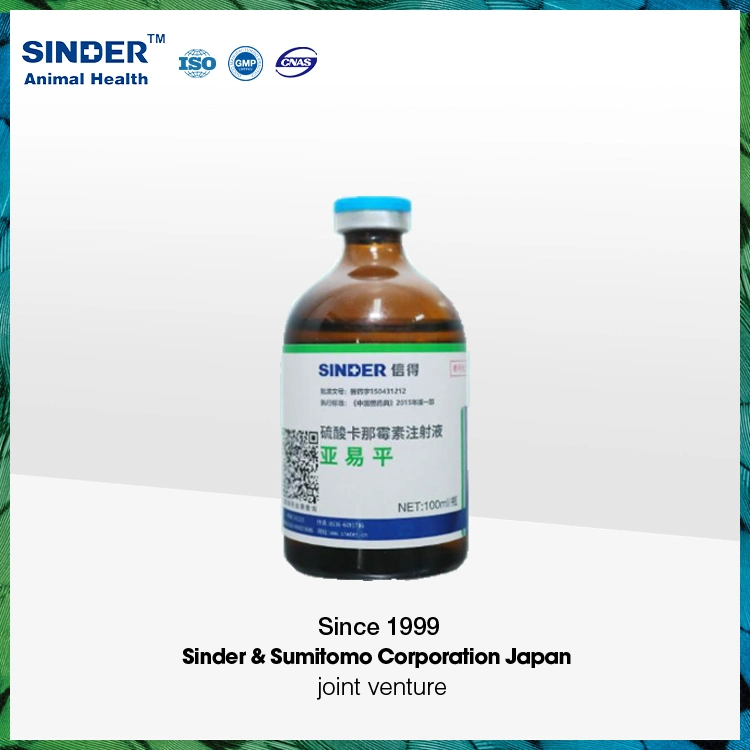
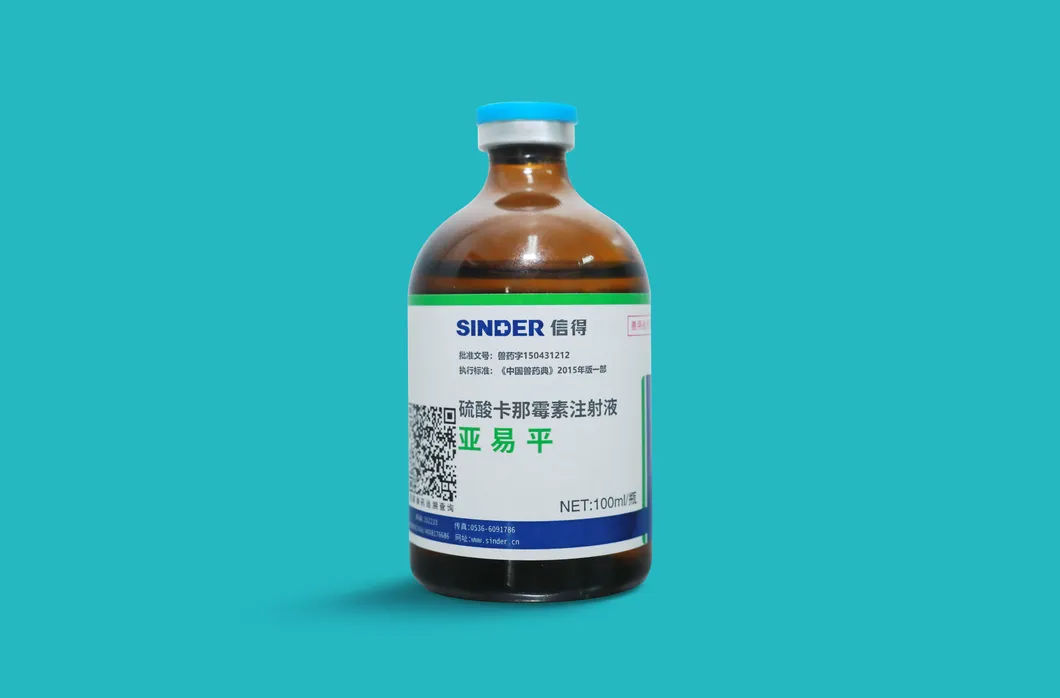
Model NO.:Yayiping
Type:The First Class
Main Component:Kanamycin Sulfate
Shelf Life:2 Years
Specification:100ml/bottle
Storage Method:Light Proof / Close
Generic Name: Kanamycin Sulfate Injection
Pharmacodynamics: Kanamycin belongs to aminoglycoside antibiotics. It has strong antibacterial effect on most gram-negative bacilli, such as Escherichia Coli, Proteus, Salmonella and Pasteurella multocida, and is also sensitive to Staphylococcus aureus and Mycobacterium tuberculosis.
Pharmacokinetics: The intramuscular injection absorbed rapidly, reaching peak concentration in blood within 0.5-1.5 hours. It is widely distributed in pleural effusion, ascites and parenchyma organs. 40%~80% of the injection dose is excreted from urine in the original form.
🔹 Indication: Used to treat septicemia, urinary tract and respiratory tract infections, and pig asthma.
🔹 Administration: Intramuscular Injection: 0.1-0.1ml per 1kg body weight for livestock. Twice a day for 3-5 consecutive days.
🔹 Withdrawal Period: 28 days for livestock. Milk rejection period: 7 days.
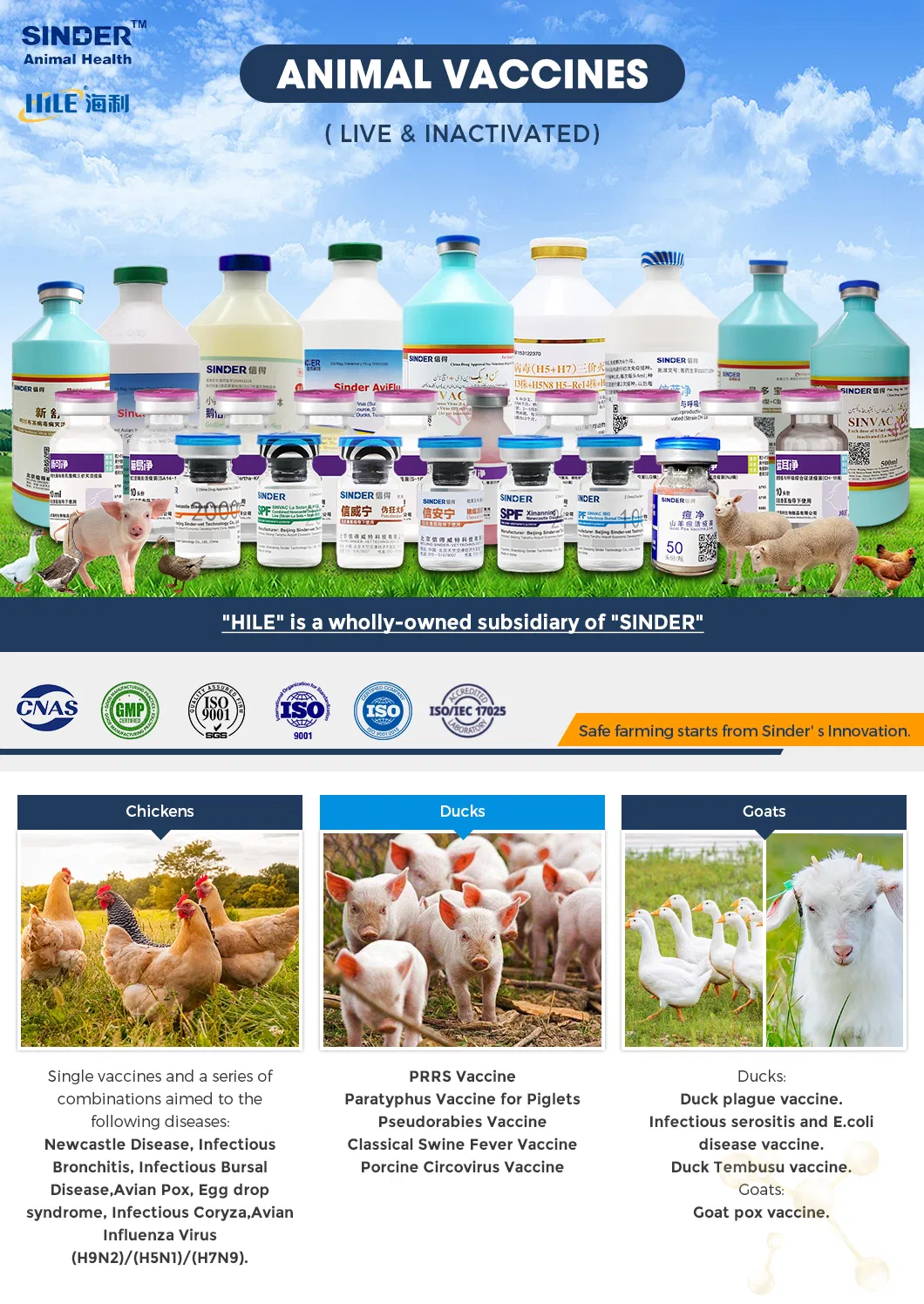
Compliance with ISO 9001, 17025, 14001, 45001 and equipped with 16 GMP production lines.

❓ Frequently Asked Questions (FAQ)
Q1: What are the main indications for Kanamycin Sulfate Injection?
A: It is primarily used for treating septicemia, urinary tract and respiratory tract infections, and pig asthma in livestock.
Q2: How should the dosage be administered?
A: The recommended dose is 0.1ml per 1kg of body weight via intramuscular injection, twice daily for 3-5 days.
Q3: What is the withdrawal period for meat and milk?
A: The withdrawal period for livestock is 28 days, and the milk rejection period is 7 days.
Q4: Are there any known drug interactions?
A: Yes, it has synergistic effects with penicillin but its toxicity can increase if used with alkaline drugs or powerful diuretics like furosemide.
Q5: What is the shelf life and storage condition?
A: The product has a shelf life of 2 years and should be stored in a closed, light-proof environment.
Q6: Can this be used for animals with renal dysfunction?
A: Use is not recommended when dehydration or renal function damage is present in the affected animal.